
DeSantis Herpetology Research Lab
The DeSantis Herpetology Research Lab at Georgia College is a collaborative and collegial group dedicated to using our collective enthusiasm and expertise to pursue the scientific study of herpetofauna. As such, we are expressly opposed to confrontational and/or competitive behavior with individuals in or outside of the research lab. In scientific research, cooperation and collaboration always surpasses confrontation and competition in both productivity and progress. We are also dedicated to complete follow-through on all research endeavors in the lab; this entails frequent presentation of project results at local and international conferences and ultimate publication in peer-reviewed and indexed scientific journals.
Our lab uses herpetofauna focal organisms to conduct research in behavioral ecology,
conservation biology, and natural history. The overarching goal of much of this work is to use an
integrated approach to explore the biogeographic and behavioral interactions between
herpetofauna and their environments. In pursuit of this goal, we make use of a variety of
methodological frameworks and techniques, including captive experimentation, longitudinal
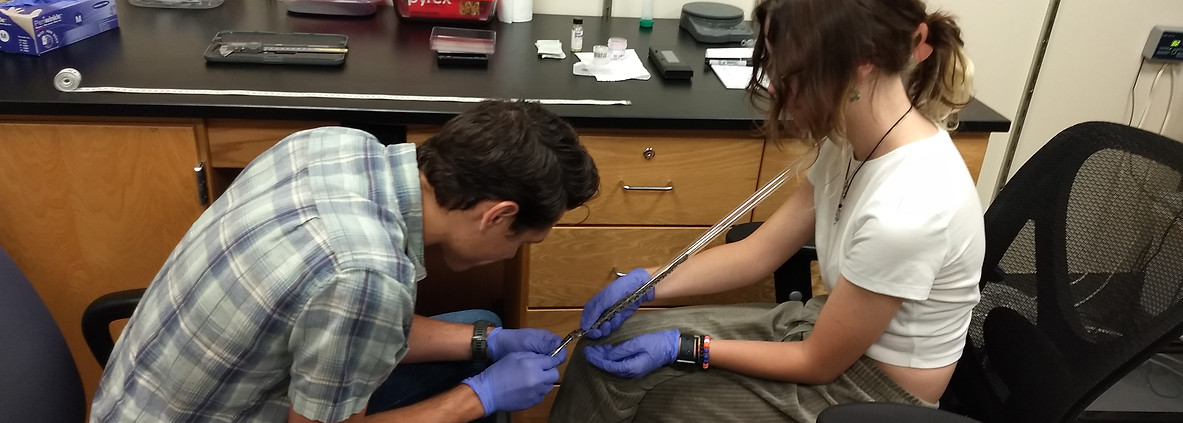
monitoring in the field, mark-recapture, and large-scale regional conservation assessments. Much
of the behavioral ecology research makes use of snake focal taxa. Ongoing and developing
projects involve the novel integration of radio telemetry and accelerometry to improve our ability
to monitor the movement and behavior of secretive species in the field. These projects require
intensive field data collection and advanced data processing and analysis techniques, such as
mixed-effects modelling and machine learning. Our conservation biology research is primarily
focused on the biodiversity hotspot of Mesoamerica (Mexico and Central America). This work
involves a combination of field expeditions for contemporary natural history data collection, and
the use of multiple conservation status assignment systems for producing extensive regional
conservation assessments for herpetofauna.